
Ecodesign
The regulatory turning point for footwear
The fashion industry, and consequently the footwear sector, is undergoing a profound transformation. New European directives such as E.P.R., E.S.P.R., and C.S.R.D. are reshaping the entire industry toward a circular and transparent production model.
ESPR, EPR, CSRD: from reputational value to operational requirement.
Regulations
Traceability, verifiable data, and document consistency are now essential. Re.Nova guides the process, supporting brands and processors in achieving these objectives.
EPR: Extended Producer Responsibility
ESPR: Eco-design for Sustainable Products Regulation
CSRD: Corporate Sustainability Reporting Directive
Delivering circularity
with Re.Nova
At Re.Nova, we do not simply produce recycled polymers. We define the production process, reducing its impact and involving all stakeholders within a transparent framework.
This approach allows us to develop concrete circularity projects applied to finished products, both in open-loop and closed-loop systems, starting from the recovery of waste, semi-finished materials, and pre- and post-consumer products.
Operationally, this translates into:
Environmental impact:
MINUO, from measurement to action

Supply chain:
Charlie, the transparent footwear revolution
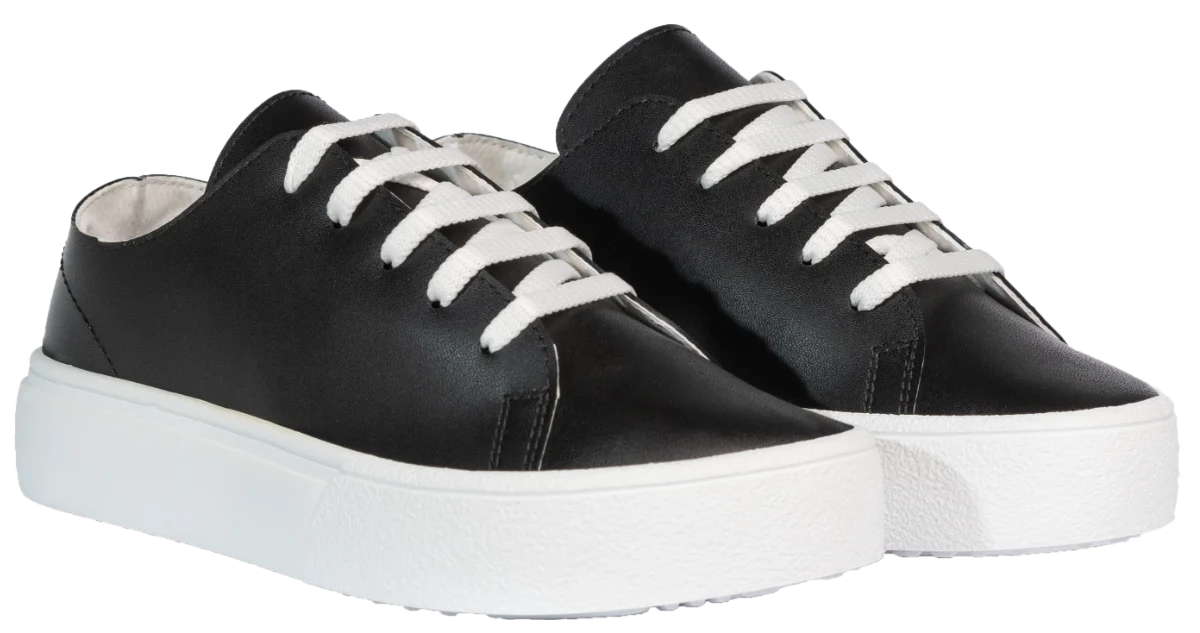
Our commitment to supply chain transparency takes shape in the Charlie project: a children’s sneaker designed according to ecodesign principles and fully recyclable at end-of-life. Charlie is not just a product, but an ecodesign-driven system: from design for real recyclability (aligned with ESPR/EPR) to the availability of audit-ready data.
At the core of the Charlie project is the Digital Product Passport, which follows the shoe throughout its entire lifecycle and provides certified data on origin, processes, recyclability, and impacts.
LCA
The Life Cycle Assessment (LCA) analysis was used to compare the impacts associated with the commercialization of plastic granules intended for the production of finished goods (e.g. shoe soles), across two scenarios:
- 100% virgin granules produced from fossil sources;
- granules containing recycled material (OLIFOUR).
The study considered all major emission sources associated with the different stages of the process, including upstream and downstream activities (such as sourcing, processing, and product commercialization).
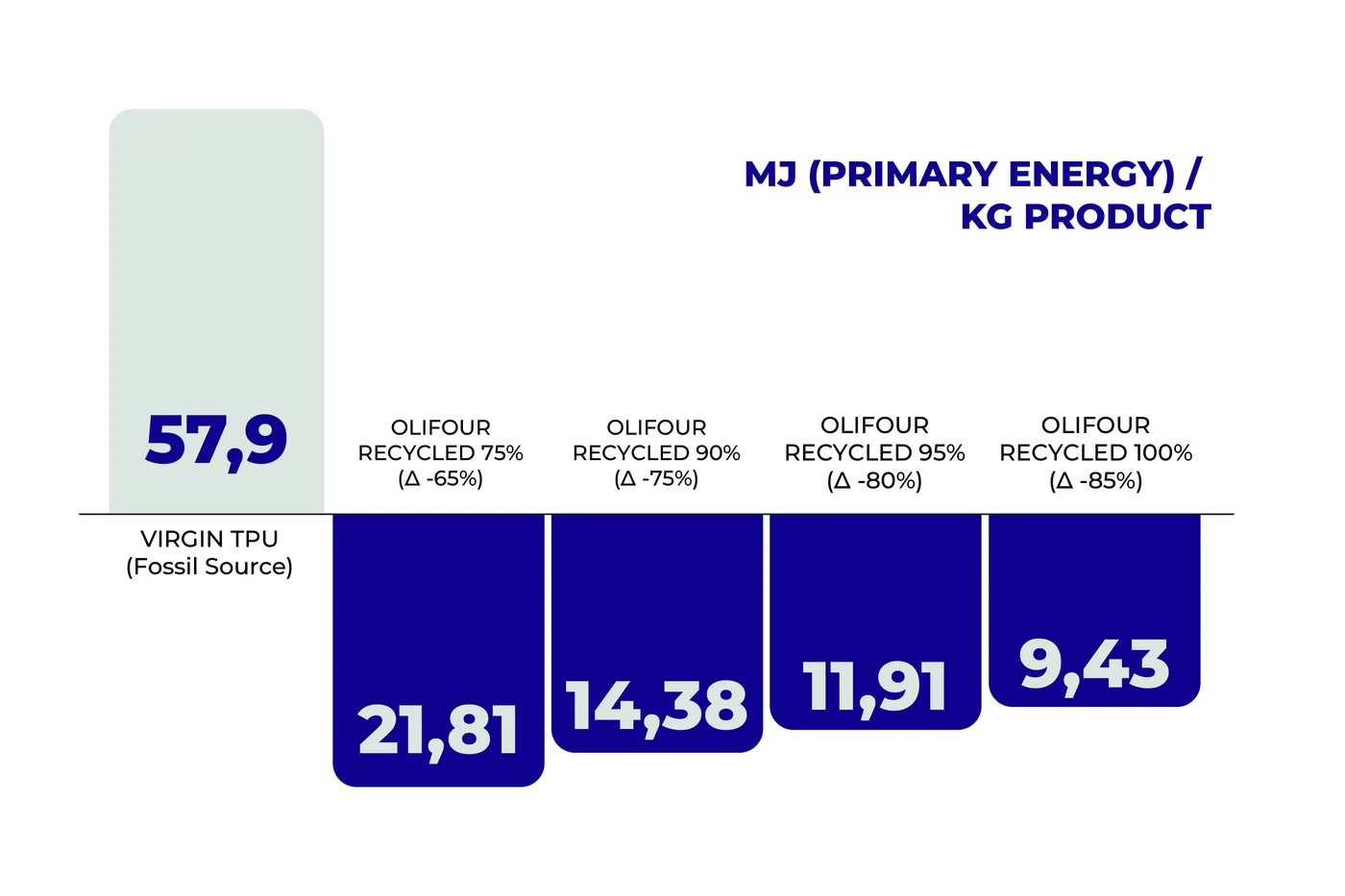
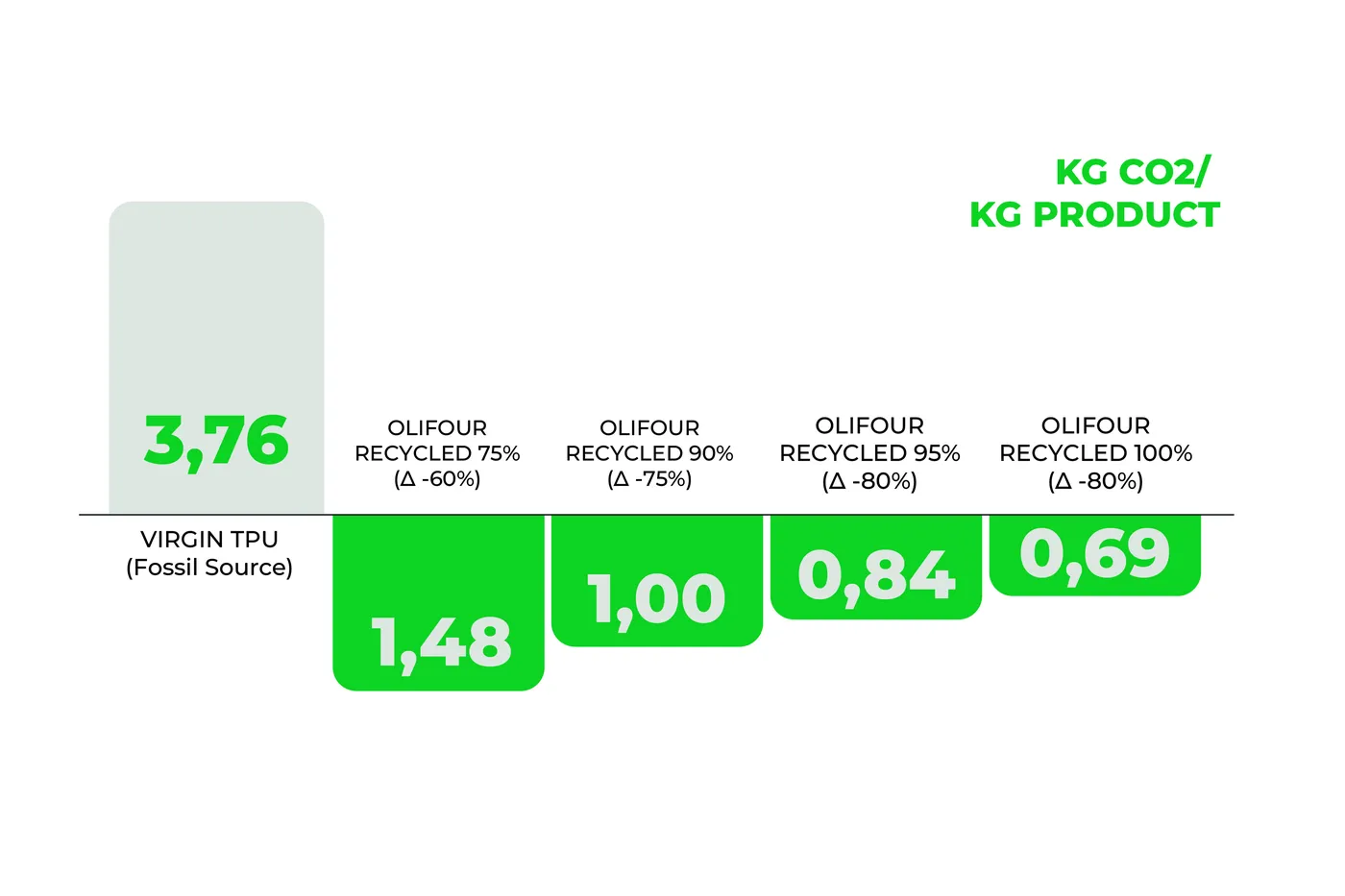
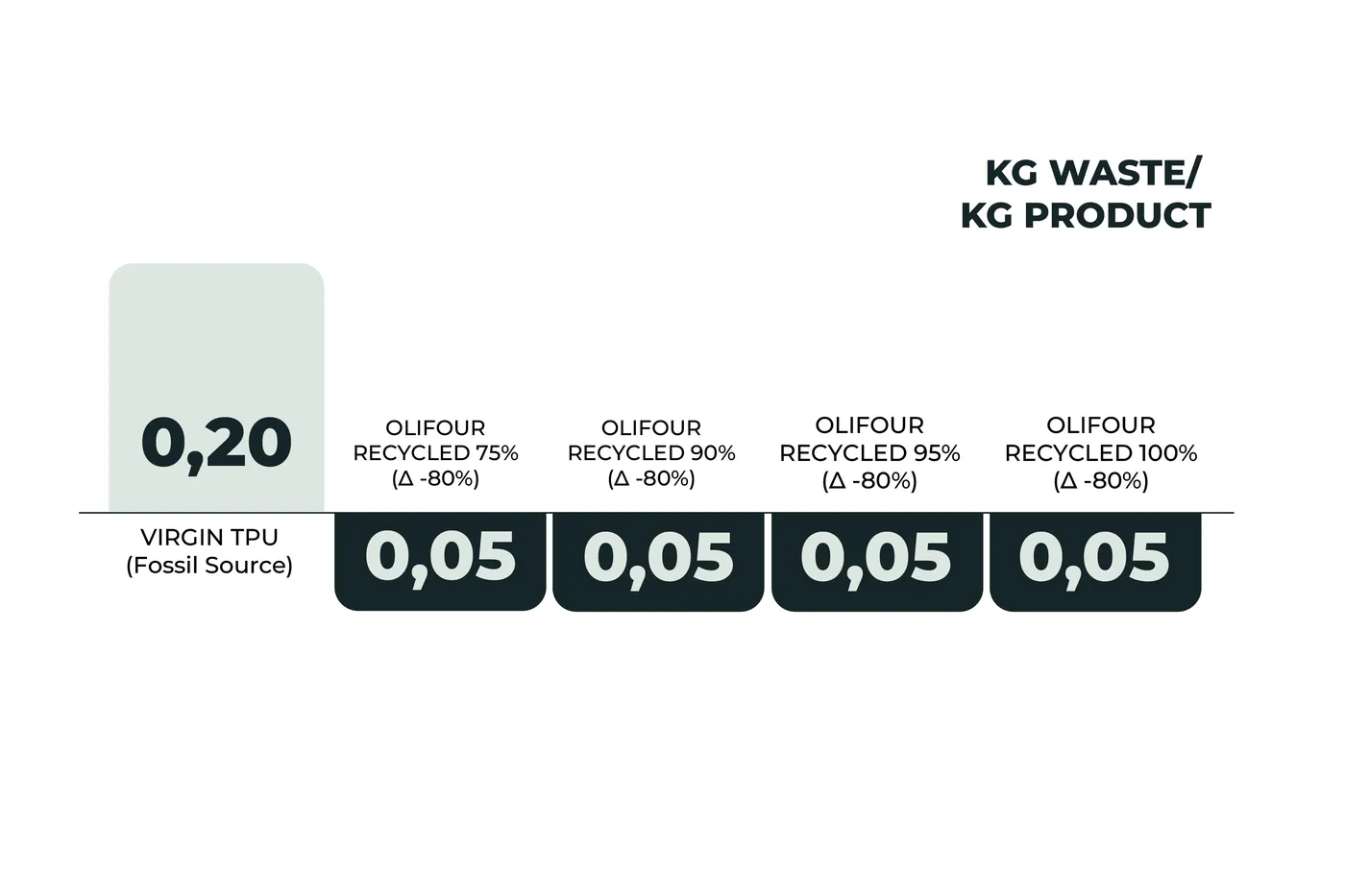
The results highlighted a significant difference between the two scenarios, showing an overall reduction in impacts for granules containing recycled material.
In particular, the LCA demonstrated that OLIFOUR products: